Day trip · private vehicle and driver
Day trip to the Ourika valley.
A river valley that climbs into the High Atlas, ending at the seven waterfalls of Setti Fatma. The closest green escape to Marrakech.
The itinerary
- Drive south through the argan and olive country.
- A Berber house, and how a mountain family actually lives.
- Setti Fatma and the walk up towards the waterfalls.
- Lunch on a terrace over the river.
- Back in Marrakech for the end of the afternoon.
Practical details
The day is accompanied by your private tour guide in Marrakech, with a driver and vehicle kept for your group alone.
Cancellation terms depend on the bookings already made and appear on your quote, before any payment.
What you actually see
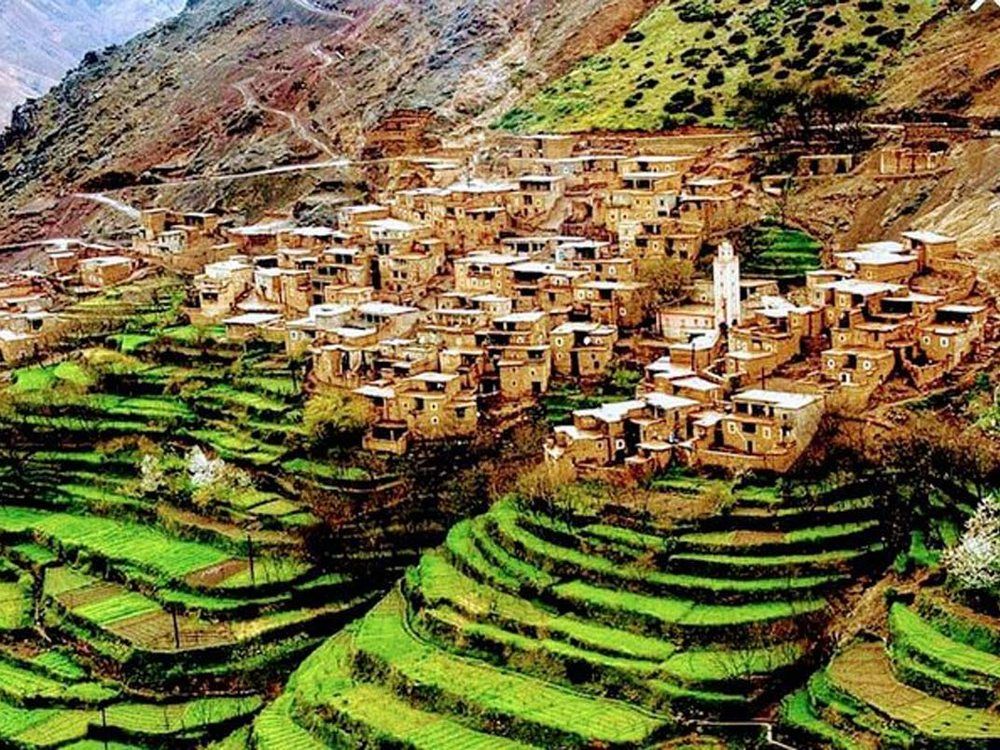
Ourika is the closest valley to Marrakech, an hour away, and the greenest. The river comes down from the High Atlas between banks of poplars and willows, with Berber villages clinging to either side. In April and May the cherry and apple blossom changes the landscape entirely.
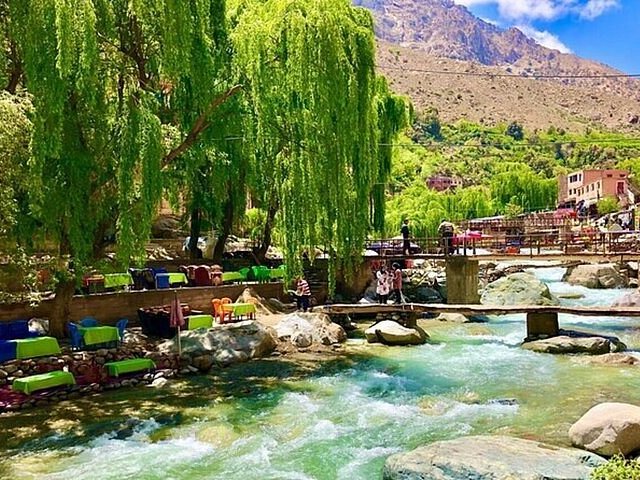
Setti Fatma, at the head of the valley, is where you arrive. It has the tables set in the river itself, the picture everyone brings back from Ourika, and the start of the path to the seven waterfalls. The first is reached in forty minutes of scrambling over rock; the ones beyond need proper shoes.
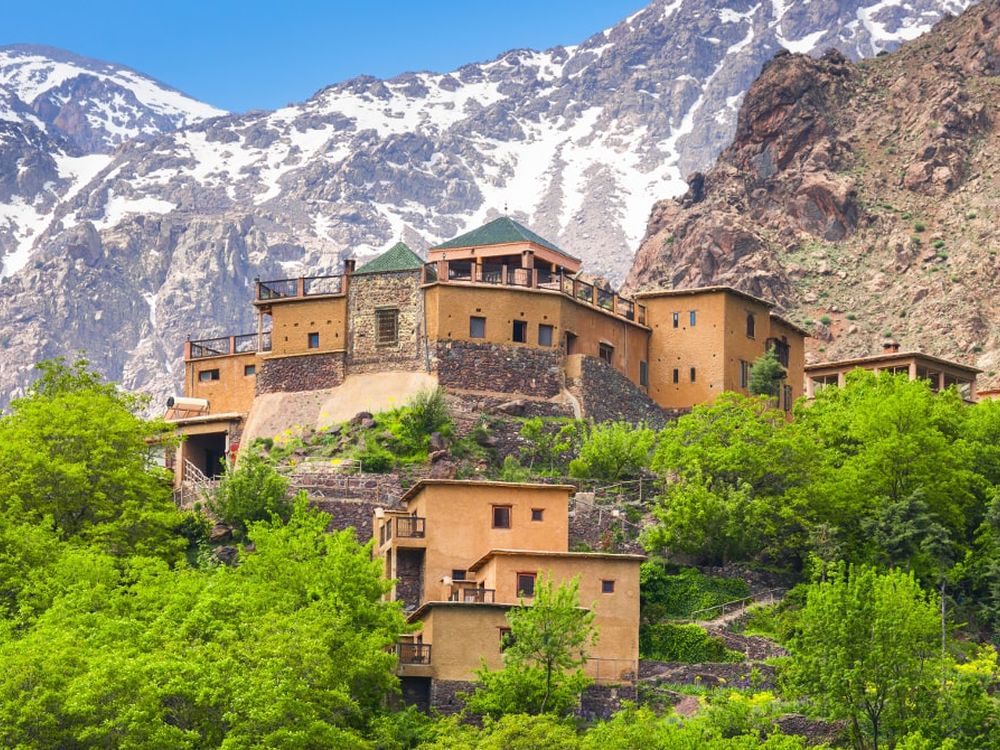
Along the way you stop according to your interests: a Berber house where the workings of a mountain household are explained, a women’s argan oil cooperative, or a pottery workshop on the Tafza road. Adil tells you which are worth stopping for and which have turned into shops.
A typical day leaves Marrakech around nine and is back in the late afternoon. The road climbs the valley, with a first stop in a Berber village and a second at an argan cooperative or a potter's, depending on what interests you. You reach Setti Fatma around midday, eat beside the water, and the walk up to the falls fills the early afternoon. The way back is unhurried, with a photo stop on the terraces above the valley. Nothing is timed to the minute: it is your day, and Adil shapes it as you go.
The valley changes completely with the season, and it is worth knowing before you pick your dates. In spring the almond and cherry trees are in blossom and the river runs high, sometimes too high: after heavy rain or snowmelt the flow rises fast and the way to the falls is cut. In summer it is where Marrakech escapes to, ten degrees cooler than the city and shaded throughout. Autumn is the quietest and the clearest season. In winter the peaks stand white above a valley still green, the finest contrast of the year.
The Ourika is not the only valley within reach of Marrakech, and the choice depends on what you are after. It is the greenest, the closest and the easiest, which also makes it the busiest at weekends. The Three Valleys loop shows more landscape and less water. Imlil, at the foot of Toubkal, is higher and wilder, and calls for proper footwear. If you have one day and children with you, the Ourika is the right call; if you want to walk, Imlil is the better one.
Questions about this tour
Do we need good shoes?
Trainers are enough for the first waterfall, but the rocks are wet and slippery. Beyond that you need proper walking shoes. The rest of the day needs nothing special.
Can we swim?
In the pools, yes, but the water comes off the mountain and stays cold all year. After heavy rain the flow becomes dangerous and Adil calls off the climb.
Is it a good summer trip?
It is the best one. It is easily ten degrees cooler than Marrakech, with shade and water. This is the trip people from Marrakech make themselves in July and August.
Does it get crowded?
At weekends and on public holidays, yes, especially in summer: it is the favourite outing of Marrakech families. On weekdays the valley is quiet. Leaving early changes almost everything, and Adil suggests it himself when your dates fall on a Friday or a Saturday.
Does it suit children and older travellers?
The valley does: the road is good, the stops are short and lunch by the water pleases everyone. The climb to the falls is another matter. The first one takes about forty minutes of climbing over wet rock, with a few places where you use your hands. Those who would rather stay below miss none of the day.
How many waterfalls can we see?
Setti Fatma has seven. The first is the one almost everyone reaches. The second and third take another hour and a sure foot. The rest belong to mountain hiking and are not part of this day trip.